
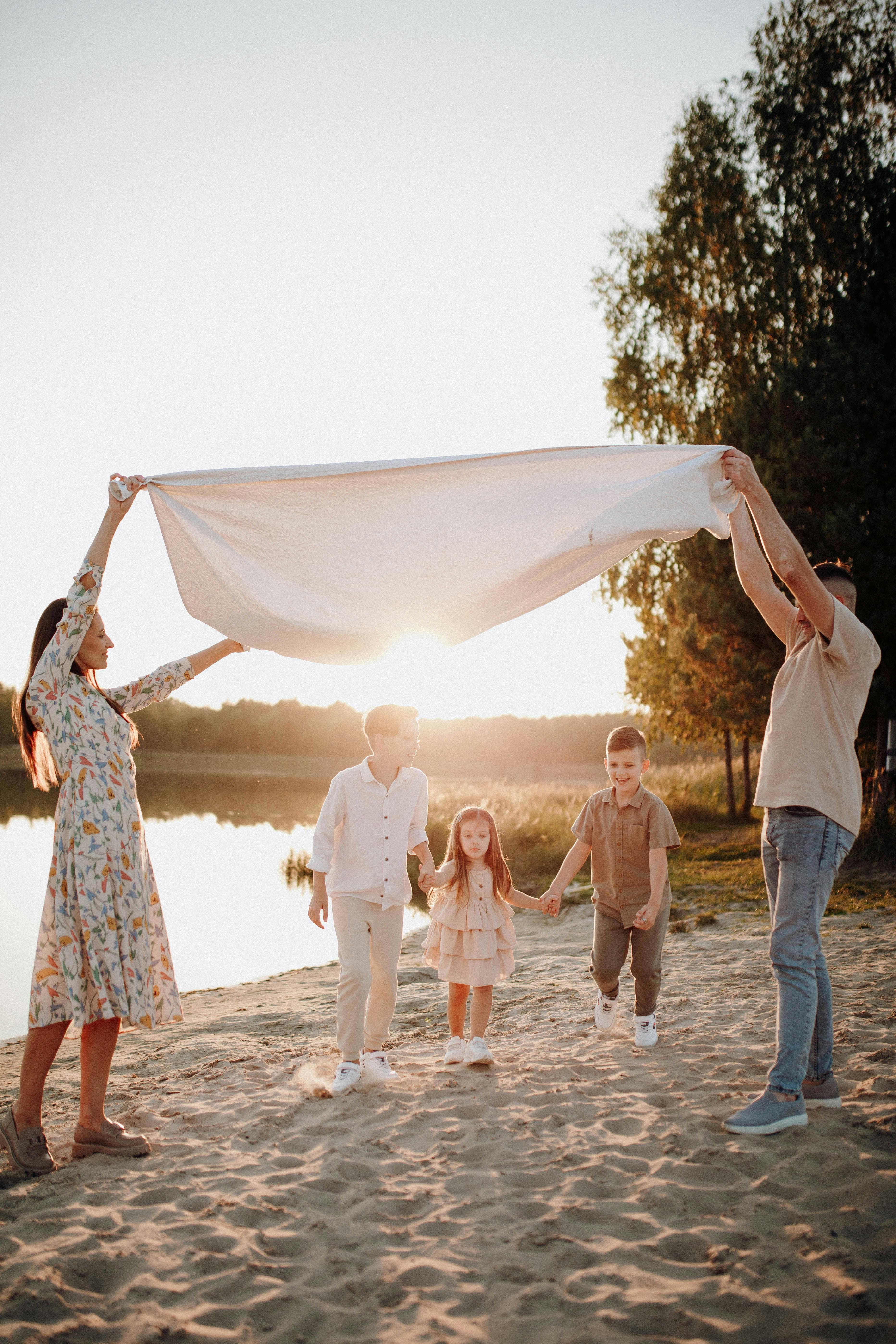
Designing family newsletters people actually want to read: Principles, practices, and the role of digital legacy platforms
A well-crafted family newsletter bridges the gap between everyday updates and long-term memory preservation. By combining modern design principles with secure digital legacy archiving, families can turn fleeting messages into structured, meaningful keepsakes that connect generations.
Family newsletters occupy a unique space between private correspondence and public storytelling, blending updates, memory preservation, and relational care in a single, recurring format. Contemporary guidance shows that the most engaging family newsletters are not exhaustive chronicles of everything that happened, but carefully curated, concise narratives that respect readers’ limited attention.
A privacy-first platform like MyHeirloom can help transform a simple family newsletter into a durable, organized component of a broader personal and intergenerational legacy. This report synthesizes best practices from family communication, newsletter design, and digital legacy preservation.
The evolving role of family newsletters
Family newsletters emerged long before the era of email and social media, but their function has remained remarkably stable. They keep geographically dispersed relatives and friends in touch with one another’s lives in a way that feels personal, periodic, and reflective.
Early printed family newsletters and holiday letters often appeared once a year, serving as a condensed year in review. Even in those early forms, writers had to make decisions about what counted as news, how honest to be about difficulties, and how to balance their own desire to share with readers’ tolerance for detail.
In the digital era, the family newsletter has diversified rather than disappeared. Many people now create newsletters as email messages or graphic layouts distributed online, while others continue to print and mail physical copies to relatives who are less digitally connected.
Email and digital newsletters allow richer formatting and embedded photos but must compete with crowded inboxes and the short attention spans of smartphone reading. Guidance from newsletter experts emphasizes mobile-friendly layouts, concise copy, clear subject lines, and strategic use of links rather than long, fully self-contained articles.
The social and psychological role of family newsletters also deserves attention. For many families, especially those spread across countries or continents, an annual or quarterly newsletter provides a ritualized moment of connection that anchors the year and affirms continuing bonds.
These updates can serve as a kind of informal family archive, incrementally recording milestones, moves, births, losses, and everyday moments that might otherwise be forgotten. Cultural critiques of the "perfect family" holiday letter have highlighted the risk of producing glossy, sanitized narratives, which is why contemporary advice emphasizes authenticity, humility, and gratitude.
Within this context, a modern family newsletter can be seen as both a communication tool and a legacy artifact. This dual role is precisely where digital legacy platforms like MyHeirloom become relevant. They offer a secure environment in which newsletters, photos, recipes, and family stories can be organized, contextualized, and revisited over time rather than disappearing into email archives.
Audience, purpose, and emotional tone
Understanding your readers
Almost all experienced newsletter writers recommend starting with a clear sense of who will be reading your newsletter and what matters to them. A family newsletter might go to close relatives, more distant cousins, old friends, or former colleagues. Each of these audiences will have different levels of familiarity with your day-to-day life and different appetites for detail.
Thinking in specific categories like travel, family, and everyday routines helps writers select what will make readers feel most connected. This focus on the reader does not imply that writers must suppress their own voice. Rather, it helps shape decisions about tone, depth, and content selection.
Digital legacy considerations also shape audience thinking. When you imagine your newsletter being read by future descendants, you may choose to include slightly more context about people, places, and events than you would if you were writing only for contemporaries.
Platforms like MyHeirloom make this dual audience more concrete. A newsletter uploaded as a Keepsake can explicitly identify the relatives involved through My Tribe profiles, be connected to specific branches of a Family Tree, and be tagged with dates, locations, and themes.
Clarifying purpose: Informing, connecting, preserving
Once the audience is clear, the next question is what the newsletter is fundamentally for. Advice writers often distinguish between three overlapping purposes: providing news, strengthening relationships, and preserving memories.
The most satisfying family newsletters explicitly balance these three purposes to avoid feeling like dry corporate reports. A purely emotional or reflective letter that omits concrete updates may leave readers unsure what actually happened, while a letter focused entirely on preserving every detail may overwhelm them.
Digital tools can support this balancing act. For instance, a family newsletter might highlight a few major events in its main text and then link to more detailed stories or photo galleries stored in MyHeirloom as Keepsakes.
Over time, the newsletters and Keepsakes together create a layered archive where high-level summaries and in-depth narratives coexist.
Emotional tone: Authentic, light, and respectful
Tone is one of the most frequently discussed aspects of family newsletters, largely because of widespread discomfort with boastful holiday letters. Adopting a conversational, down-to-earth tone that mirrors how you would speak to a friend over coffee creates genuine warmth. This means using clear, simple language and not worrying excessively about formal stylistic perfection.
At the same time, tone involves ethical considerations. Family newsletters often touch on sensitive topics like health challenges, financial difficulties, or major life transitions. These topics should be approached with care, consent, and an awareness of what is appropriate to share in a semi-public format.
Finding the right balance between honesty and positivity ensures the written record remains supportive and authentic. Framing challenges in terms of what was learned, what support was appreciated, or what hopes exist for the future maintains a tone of grounded resilience.
Light humor, self-deprecation, and playful anecdotes can make a newsletter feel enjoyable and memorable. MyHeirloom’s Weaver assistant can play a helpful role here, prompting writers to reflect on how their words might be interpreted and helping balance serious content with lighter moments.
Content design: What to include (and what to leave out)
Selecting highlights rather than exhaustive chronologies
One of the most common mistakes in family newsletters is trying to include everything that happened in a given period. Exhaustive approaches produce long, dense texts that many recipients simply set aside and never actually finish.
Instead, advisors recommend identifying a set of highlights that capture the emotional and narrative arc of the year, even if many smaller events are left unmentioned. You can do this by selecting the top milestones for each family member or looking through a year's worth of photos.
For genealogically minded families, holiday newsletters can also incorporate small doses of family history. Adding a paragraph or two about an ancestor, a family heirloom, or a historical document recently discovered links present updates with deep ancestral roots.
Digital tools help manage the tension between brevity and completeness. Short newsletter highlights can be accompanied by links to deeper stories stored as Keepsakes in MyHeirloom, where a writer can record a fuller version of a significant event without overloading the newsletter itself.
Storytelling techniques: From what happened to why it mattered
Another frequent recommendation is to move beyond a bare recital of events to include some reflection on feelings, context, and meaning. Sharing why an event mattered makes a newsletter far more engaging by building emotional connections.
Give them the home they deserve. Bring your family legacy into the digital age.
Start archivingAt the same time, there is caution against over-writing. Narrative depth does not require lengthy, florid descriptions; keeping paragraphs short and concise ensures the text can be easily skimmed on screens.
Weaver within MyHeirloom can assist with this storytelling layer by prompting users with questions about each event. These richer narratives can be stored in the Legacy Room, while condensed versions appear in the newsletter.
Visual content: Photos, layout, and design
Visual elements play a central role in family newsletters, giving readers an immediate sense of connection. Simple design templates can help you arrange layouts and create visually appealing collages without needing professional graphic design skills.
However, visual content must be used judiciously to avoid cluttering the layout and slowing down mobile load times. Selecting a few high-impact photos that directly support the stories is always the best approach.
Typography and clear headings also matter, especially since many readers access newsletters on smartphones. Clear, single-column layouts are generally the most mobile-friendly choice.
When a newsletter is intended for long-term preservation, design choices should support longevity. Simple, clear layouts with embedded captions and descriptive text are more likely to remain understandable decades later.
Common content pitfalls and how to avoid them
Expert advice sources identify several recurring pitfalls that undermine the readability and relational effectiveness of family newsletters. Keeping family letters to one or two pages respects your readers' limited time.
Another frequent issue is an unintentionally boastful tone. Framing achievements with explicit gratitude and balancing successes with honest challenges helps prevent this dynamic.
Oversharing sensitive family details can easily cross personal boundaries and cause distress. Respecting the privacy of children and relatives ensures the newsletter remains a safe space.
Finally, avoid making the newsletter entirely one-way. Ending with an invitation for response or a question transforms the newsletter from a broadcast into a mutual, caring dialogue.
Structure, frequency, and delivery in a digital age
Length, cadence, and sustainability
Effective family newsletters are not only well-written, but they are also sustainable. Choosing a length and cadence that you can maintain prevents burnout and ensures high-quality updates.
Sending newsletters too frequently may lead to fatigue, while sending them too rarely makes updates excessively long. Finding a natural mid-year and year-end cadence often works best.
Sustainability also depends on your process. Keeping a running list of events throughout the year in MyHeirloom helps you easily draft updates without struggling to remember past details.
Layout, headings, and mobile-friendly design
In the digital era, layouts must be optimized for mobile devices. Using responsive formats rather than rigid attachments ensures the text reads smoothly on smaller screens.
Clear subheadings help readers quickly skim for topics that interest them, boosting overall engagement. Subheadings like "Family Highlights" or "Looking Ahead" provide excellent structural anchors.
Typography choices also affect accessibility. Restricting your layout to one or two clean, web-safe fonts prevents visual noise and keeps the reading experience pleasant.
Titles, subject lines, and openability
Whether delivered physically or digitally, the title or subject line determines if recipients engage with your update. Short, engaging titles give readers a clear reason to open the message and read further.
Subject lines should also reflect your identity so recipients recognize the sender. Playful titles can signal that the update is part of a recurring, cherished family series.
When these named newsletters are preserved as Keepsakes, the title becomes a key metadata field, making it incredibly simple to organize and search the archive.
Calls to action and encouraging reciprocity
While family newsletters are not marketing tools, they still benefit from clear invitations to engage. Placing these invitations near the end of your letter naturally encourages connection.
Inviting family members to reply with their own news or contribute memories transforms a monologue into a rich dialogue. When tied to MyHeirloom, you can invite relatives to explore a shared Legacy Room.
Over time, this reciprocal pattern helps sustain the entire family storytelling ecosystem. The newsletter becomes a recurring reminder of your shared digital home.
Tools, templates, and the transition from chaos to cohesion
Choosing platforms and templates
Modern creators have access to a wide range of tools, from standard word processors to online design platforms. Using pre-designed templates helps you create beautiful layouts without specialized skills.
Specialized layouts can inspire you to present your stories in creative formats like recipes, travel journals, or family trees. This breaks up the traditional text-only structure.
Still, you should avoid overcomplicating the design. A consistent, simple layout across all issues is far more valuable for long-term readability than constant aesthetic changes.
Integrating analytics, archives, and multi-channel use
While family updates do not need professional analytics, paying attention to which stories generate the most replies can help you refine future content.
Organized archival practices ensure your newsletters do not get lost in cluttered email threads or physical boxes. Genealogists highly recommend keeping sequential collections of these updates.
This is precisely where MyHeirloom provides structural value. You can upload each issue into your Legacy Room, categorizing it as a Keepsake tagged with the relevant years, themes, and family members.
Multi-channel use is also streamlined. You can email a digital copy, print a physical version for less-connected relatives, and store the master version securely in your archive.
From chaotic storage to coherent legacy
Photos, documents, and family stories are often scattered across multiple phones, messaging apps, and cloud drives. Without consistent organization, these precious narrative fragments risk disappearing entirely.
MyHeirloom addresses this fragmentation by providing a single, secure environment to collect and contextualize family stories. The newsletter can function as both a summary and an index to deeper content.
By integrating these elements, families move from chaotic storage toward a coherent, navigable archive that benefits both present readers and future generations.
Family newsletters as legacy artifacts
Connecting newsletters to genealogy and family history
Family historians increasingly recognize newsletters as valuable sources for reconstructing personal histories. These collections offer future generations insights into everyday life that formal genealogical records often omit.
Create a digital legacy that your children and grandchildren will be proud of.
Create a family legacyThe newsletter format is ideal for integrating past and present. Sharing recent updates alongside stories of ancestors who faced similar life transitions creates a beautiful continuum of resilience.
MyHeirloom’s Family Tree feature naturally complements this approach. You can easily attach newsletters to specific branches, enriching static genealogical charts with rich narrative context.
Intergenerational living and narratives of care
Family newsletters often document evolving patterns of care, particularly in multi-generational households. Documenting how families navigate shared spaces and caregiving experiences provides a highly valuable record of family values.
These qualitative accounts are of deep interest to future descendants who wish to understand the family's lived experiences during cultural or economic transitions.
Patron accounts within MyHeirloom offer a dedicated avenue for memorializing specific individuals, allowing you to compile newsletters and documents that celebrate their unique life journey.
From periodic updates to long-term legacy planning
Viewed over time, a series of family newsletters functions as a serialized autobiography of a household. This perspective highlights the value of writing with a long-term legacy in mind.
MyHeirloom’s Legacy Room concept aligns with this view, framing digital archives not as random files but as curated, evolving life stories. Important documents can be kept in the DocuVault, while newsletters provide the emotional context.
This intentional approach does not make newsletters stiff or formal. Instead, it ensures they remain lively updates while safeguarding their accessibility for future generations.
How MyHeirloom supports engaging, enduring family newsletters
Turning newsletters into Keepsakes within a Legacy Room
MyHeirloom’s core structure revolves around the Legacy Room, a secure space to organize life stories and media. Here, newsletters are natural candidates for Keepsakes, which can be enriched with dates, locations, and tags.
Gathering all issues in one dedicated space transforms ad hoc digital clutter into a beautifully organized serial archive. The Life Timeline automatically aligns newsletters chronologically with other milestones.
You can also attach supplementary materials to these Keepsakes. A brief newsletter mention of a family vacation can link directly to a larger photo gallery or a scanned travel journal.
Linking newsletters with My Tribe, Family Tree, and Family Cookbook
Newsletters are filled with mentions of specific relatives and their accomplishments. In ordinary storage, these details remain disconnected fragments.
Connecting newsletter Keepsakes to My Tribe profiles and Family Tree nodes allows future readers to navigate directly from stories to relationship contexts. This weaves a dynamic web of family connections.
You can also integrate the Family Cookbook. Linking holiday recipes mentioned in your newsletters to their actual culinary steps ensures both the narrative and the traditions are preserved.
Weaver as a storytelling companion
Writing is often one of the main barriers to creating family updates. MyHeirloom’s Weaver feature acts as a conversational guide to help you recall details and organize your thoughts.
By asking targeted questions, Weaver helps you shift from a basic list of events to meaningful, reflective stories. This makes your writing process much faster and more rewarding.
This supportive tool does not replace professional advice, but rather serves as a creative memory companion. It ensures your archived letters carry genuine depth and emotional resonance.
Privacy, security, and Trusteeship for sensitive content
Family updates often contain personal details about health, locations, or young children. A privacy-first platform is essential to prevent this sensitive information from circulating publicly on social media.
MyHeirloom accounts are private by default, giving you granular control over who can view your Keepsakes. This security allows families to share candid updates with complete peace of mind.
For highly sensitive materials, the DocuVault offers password-protected storage. This keeps documents secure while allowing the corresponding newsletters to focus on the emotional aspects of the story.
The Trusteeship feature ensures your digital legacy remains secure. By designating a trusted Trustee, you guarantee that future generations can access and enjoy these archived updates.
Patron accounts and multi-voice legacy
Patron accounts enable you to build Legacy Rooms for or about other family members, such as children or deceased relatives. This supports collaborative, multi-voice archiving where several relatives contribute to a shared legacy.
These dedicated spaces can gather specific letters, milestones, and documents, creating a textured family history that goes far beyond a single writer's perspective.
Conclusion: From holiday letters to meaningful digital legacy
Family newsletters occupy a vital space at the intersection of everyday communication and long-term history. Following clear storytelling and design practices turns simple updates into highly anticipated, relational experiences.
The modern digital environment offers powerful tools but also risks scattering family stories across fragmented apps and devices. Standard cloud storage solutions rarely preserve the rich contextual relationships that make memories meaningful.
MyHeirloom solves this challenge by integrating your newsletter Keepsakes into a secure, unified digital home. This positions your updates within a broader narrative, supported by tools like Weaver and the DocuVault.
For those looking to start or revive a family update, the path forward is simple. By starting for free, you can begin turning your next holiday letter into a beautiful, secure Keepsake that future generations will cherish.
FAQ
1. How can MyHeirloom help preserve our past family newsletters?
You can upload newsletters as digital documents or image Keepsakes in your Legacy Room. This positions them chronologically on your Life Timeline and links them to specific family members.
2. Is a digital legacy platform safer than standard email archives?
Yes, email inboxes can be lost, deleted, or hard to search. MyHeirloom offers a secure, organized environment with Trusteeship, ensuring your family archives remain accessible for future generations.

MyHeirloom gives you a dedicated Legacy Room—a private, secure space to collect photos, videos, documents, and stories.
Start now for free