
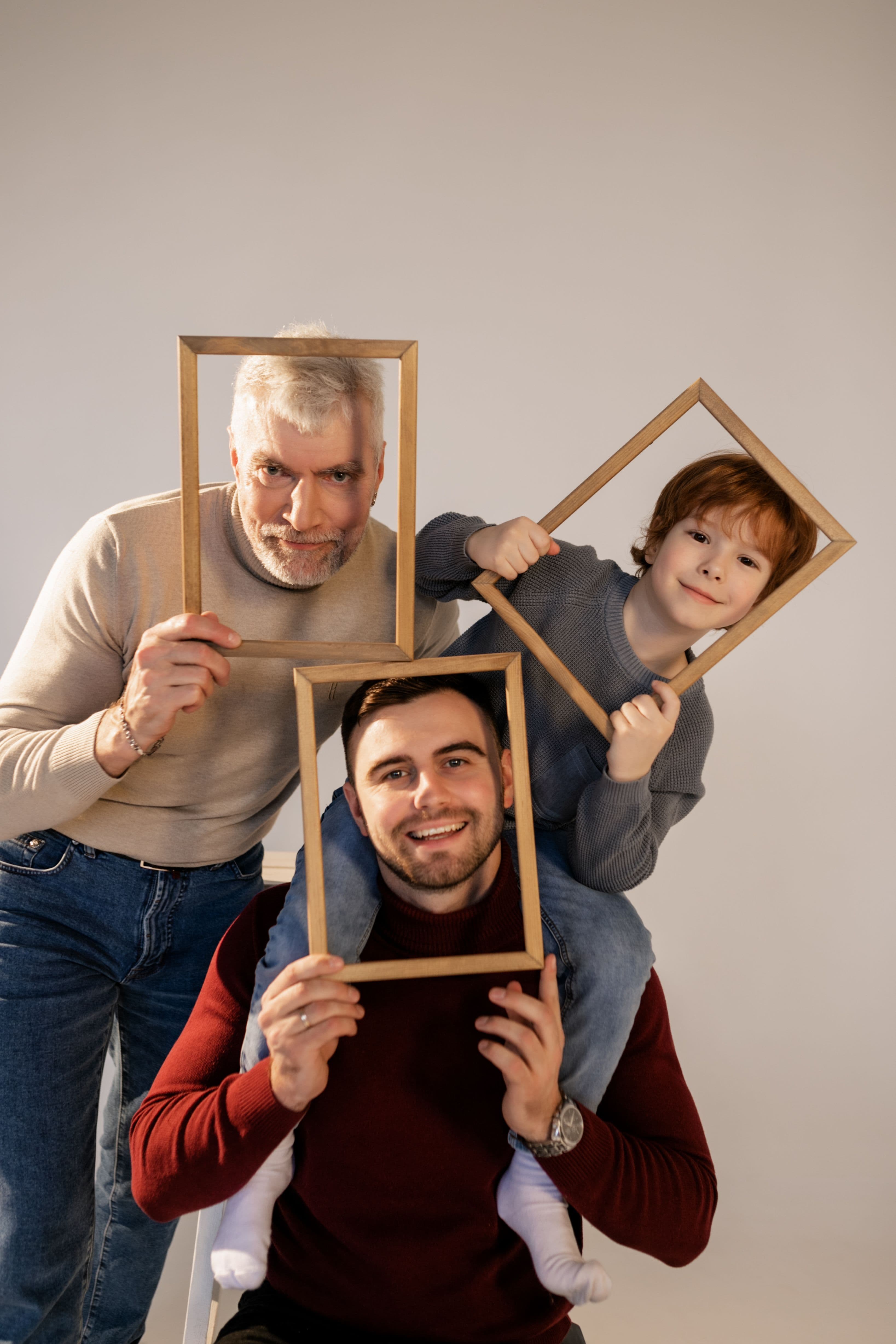
Preserving a meaningful legacy in the twenty-first century requires more than recording names and dates along a genetic line; it demands an honest portrait of the people who actually shaped a life, including friends, neighbors, mentors, and other non-biological ties who often provided crucial support, love, and shared memories.
Digital legacy platforms such as MyHeirloom are increasingly designed around this broader understanding of family, integrating features like My Tribe and an inclusive Family Tree. This allows users to preserve not only blood relationships but also the wider constellation of connections that made their lives rich, resilient, and socially connected.
This report examines the social-scientific, psychological, genealogical, and technological reasons for including friends and neighbors in a legacy archive. It explores how MyHeirloom’s design embodies these insights, offering practical and ethical guidance for users who want their digital legacy to reflect their lived relationships.
Moving beyond bloodlines is not a sentimental add-on. It is a necessary evolution for anyone who wants to turn scattered memories, relationships, and important information into an organized, secure, and meaningful legacy.
Rethinking "family": From lineage charts to lived networks
The traditional family tree has long functioned as a simple visual metaphor for ancestry, with branching lines that connect parents to children across generations. Historically, this tree has focused on biological or legally recognized ties like marriage and adoption as the primary connections to record.
This approach was shaped by legal and state archives that privileged kinship as a matter of descent rather than day-to-day social life. As a result, the standard pedigree chart became a narrow image of human connection, often omitting the friends, neighbors, and mentors who occupy a central place in life stories.
Yet actual family experience rarely fits neatly into a purely biological framework. Many genealogists now actively discuss whether and how to include non-blood relatives in family trees, noting that adding such figures is both acceptable and helpful for understanding real relationships.
These conversations reflect a broader shift from treating the family tree as a legal document to viewing it as a living representation of social bonds. Modern family structures have become more complex, making a purely blood-based representation inadequate for capturing how people actually experience kinship and belonging.
Sociological and psychological research further strengthens the case for this broader view. Close relationships, irrespective of genetic ties, are central to health, well-being, and thriving across the lifespan.
An integrative model of thriving through relationships emphasizes that well-functioning close bonds help people cope with adversity and pursue growth. These supportive roles are not restricted to blood relatives; they are frequently fulfilled by friends, neighbors, and colleagues.
Digital legacy platforms such as MyHeirloom are emerging precisely at this intersection of genealogical practice and social science. Unlike generic cloud storage, MyHeirloom is designed as a structured Legacy Room that integrates Keepsakes, a Life Timeline, My Tribe, and a Family Tree.
Within this ecosystem, My Tribe explicitly allows users to include dear friends, neighbors, and mentors who collectively shape their life story. This design aligns the platform's architecture with contemporary social networks rather than outdated genealogical limits.
The remainder of this report explores this alignment in detail. It examines how concepts of kinship have expanded, reviews empirical findings about social connectedness, and highlights MyHeirloom’s focus on context-rich storytelling.
Subsequent sections analyze the design of My Tribe, consider privacy implications, and offer practical guidance for building an inclusive archive. It concludes with reflections on how this approach enriches genealogical practice and invites readers to begin their own legacy work.
Kinship, friendship, and community: Theoretical foundations for My Tribe
Traditional kinship and emerging forms of "chosen family"
Anthropologists have long distinguished between formal kinship systems and the fluid social relationships people maintain in daily life. In many societies, fictive kin are individuals who are not biologically related but are treated as family due to long-term association or deep emotional ties.
Contemporary Western contexts have seen a resurgence of this idea under the term "chosen family," particularly where biological ties are strained. In these cases, supportive networks are built through friendship and shared identity rather than blood.
In genealogical communities, practical questions about these relationships emerge frequently. Many genealogists affirm that including non-blood relatives in a family tree is beneficial for research and connection.
This consensus reflects the recognition that step-parents, partners, and other significant relationships carry profound historical significance. Digital tools support this by allowing users to add relationship notes and custom labels that clarify the nature of these ties.
When users of MyHeirloom consider who belongs in their Family Tree or My Tribe, they make decisions about which relationships are foundational to their narrative. MyHeirloom supports this by allowing users to add people they consider relatives even if they are not blood-related.
This flexibility is crucial for capturing complex family structures and honoring relationships that fall outside formal categories. It ensures that a neighbor who played a formative role or a mentor who offered life-changing support can be properly recognized.
Friends as central actors in life stories
Empirical research underscores the importance of friendship as a core component of social networks. Friends often provide unique forms of emotional support, shared identity, and everyday companionship that differ from family obligations.
The theoretical model of thriving highlights that close relationships can serve as relational catalysts, encouraging individuals to explore new opportunities. Friends are particularly likely to occupy this role, fostering growth in hobbies, careers, or creative endeavors.
In many life narratives, key turning points are intertwined with the influence of specific friends. To omit these figures from a digital legacy is to erase part of the causal chain that explains how a person’s life unfolded.
When MyHeirloom users create Keepsakes about these milestones and link them to My Tribe profiles, they anchor abstract memories in concrete relationships. This preserves both the historical event and the specific people who made it possible.
Moreover, friendships often serve as sources of continuity across changing life stages. Whereas family relationships can be structured by obligation or proximity, friendships may endure despite moves, career changes, or evolving family formations.
Including friends in My Tribe allows users to reflect this longitudinal continuity, showcasing stable anchors across decades. This inclusive representation helps future generations understand the broader social fabric in which their ancestors lived.
Neighbors and local community as proximate ties
While friends may be dispersed geographically, neighbors often constitute the most proximate social contacts outside the household. This is especially true for older adults, for whom nearby connections are crucial for daily life.
Sociological studies find that neighbors play a distinctive role in facilitating informal aid and reducing feelings of isolation. For older adults, age is positively related to neighborly socializing and volunteering, even as overall network sizes may shrink.
A large European study using data from the Survey of Health, Ageing and Retirement in Europe found that many respondents aged 50 and older regularly exchanged help with neighbors. These interactions were characterized by a high degree of reciprocity.
Neighborly support covered a range of tasks, from practical assistance with errands to emotional support in times of illness. The study noted that the need for help increased with age, reflecting changing capacities across the life course.
Another national profile of older adults' social connectedness highlighted neighbors as crucial components of community integration. Frequent neighborly socializing was associated with reduced isolation and improved access to informal aid.
These findings underscore that neighbors are not peripheral; they form a core support infrastructure when family members live far away. In the context of MyHeirloom, this implies that a meaningful digital legacy must include these proximate ties.
When users add neighbors to My Tribe and link them to Keepsakes, they document the often-invisible scaffolding of care that sustained them. This is valuable for honoring those neighbors and giving future generations a complete picture of community life.
Social connectedness, support, and thriving across the lifespan
Research on social integration consistently demonstrates that people in supportive social networks experience better mental and physical health. Social connectedness is conceptualized along dimensions such as network size, frequency of interaction, and emotional closeness.
In older adulthood, the composition of these networks often shifts toward more proximate and community-based relationships. While family remains important, friends, neighbors, and fellow community participants may occupy increasingly central roles.
Store your most cherished memories and heritage safely on Heirloom.
Preserve our memoriesPlatforms like MyHeirloom, which allow for flexible representation of social ties via My Tribe, are well suited to capturing this shifting landscape. It supports a more dynamic and realistic portrayal of social connectedness across the lifespan.
The theoretical model of thriving through relationships identifies two key support functions: source of strength (SOS) support and relational catalyst (RC) support. SOS support helps individuals cope with adversity, while RC support encourages exploration and growth in the absence of adversity.
Both functions can be fulfilled by a range of relationship types. A neighbor who checks in during an illness provides SOS support, while a friend who encourages someone to pursue a new hobby offers RC support.
Everyday encouragement and shared joy—often provided by friends and neighbors—play a vital role in enabling people to fully participate in life. MyHeirloom’s Keepsakes and Life Timeline are designed to illustrate these subtle but significant forms of support.
Large-scale research shows that neighborhoods can be valuable sources of social support, with mutual help among neighbors being common. These helping relationships are part of ongoing mutual exchange networks that sustain everyday life.
Recording these neighborly relationships is a way of acknowledging the community infrastructure that enables individuals to cope with daily logistics. This creates a record of reciprocal care that might otherwise vanish when informal arrangements disappear.
Social connectedness also extends into organized group involvement, religious participation, and volunteering. These forms of engagement introduce additional non-kin relationships that become important parts of a person's social world.
By enabling users to map their My Tribe and connect them to Keepsakes, MyHeirloom offers a contemporary analogue to historical social records. It ensures that these community-based relationships are not lost when physical records fade.
Digital legacy platforms and the importance of context
The proliferation of digital devices has transformed how people store personal data, leaving photos and documents scattered across various platforms. While this abundance offers great opportunities, important memories are easily buried in chaotic folders.
Ordinary cloud storage is largely context-free; it preserves files but not the stories and relationships that make them valuable. Digital legacy platforms address this by providing structured spaces for organizing and sharing memories.
For example, Artifcts offers a way to organize physical items and capture the meaning behind them. Its guides urge users to ask what they are trying to remember, recording the stories behind cards, letters, and other treasures.
Similarly, InaLife’s platform provides a holistic space for collecting and sharing personal digital property, including photographs and documents. Platform-level legacy features from major providers like Google, Apple, and Facebook further underscore the importance of planning for continuity.
MyHeirloom operates within this ecosystem but distinguishes itself by focusing on a unified Legacy Room where memories, relationships, and documents are interwoven. Its design foregrounds narrative and social context through integrated features.
Capturing stories behind relationships and objects
The core insight behind storytelling-oriented platforms is that context is what makes digital artifacts meaningful. A photo of a group of people becomes far more valuable when accompanied by names, dates, locations, and a description of the event.
MyHeirloom extends this storytelling logic directly to relationships themselves through My Tribe. Users can create profiles for each person, record their relationship, and link them to specific Keepsakes and Timeline entries.
By linking a Keepsake to a neighbor’s or friend's My Tribe profile, users ensure that these individuals are not lost in abstraction. This relational storytelling is particularly valuable for future generations who view the Legacy Room decades later.
Expanding family trees beyond genetic ties
Genealogists increasingly recognize that a meaningful family tree must accommodate non-traditional and non-biological relationships. Public discussions show strong support for including non-blood relatives to honor real connections.
One practical strategy is to prioritize relationships over rigid legal labels when mapping family structures. MyHeirloom’s Family Tree and My Tribe features reflect these inclusive practices by allowing users to add people who are chosen family.
By integrating My Tribe with the Family Tree, MyHeirloom combines the strengths of genealogical and social network approaches. Users can maintain traditional structures for ancestry while mapping broader social relationships.
The risks of fragmented storage and context-less archives
Without a structured platform, many people rely on ad hoc solutions to preserve their digital lives, which poses several risks. Dispersion makes it difficult to find files, and many services are not designed for long-term posthumous access.
MyHeirloom addresses these challenges by offering a centralized, privacy-first Legacy Room. The DocuVault feature allows users to store sensitive documents and instructions securely, which can be configured to become visible to Trustees later.
By combining narrative Keepsakes, relational mapping, and secure storage, MyHeirloom helps users transform a fragmented digital footprint into an organized legacy. Including friends and neighbors is a logical extension of this goal.
Design logic of MyHeirloom’s My Tribe: Beyond bloodlines by design
MyHeirloom’s architecture distinguishes between two interconnected representations of relationships: the Family Tree and My Tribe. The Family Tree maps genetic and non-genetic family structures, providing a visual tool for modern family diversity.
My Tribe is explicitly conceived as a way to expand beyond the family tree by building a circle of loved ones. This design recognizes that modern families blend biological, legal, and chosen ties, accommodating this complexity rather than erasing it.
These two features work together to create a rich representation of a user’s social world. By linking My Tribe profiles to Keepsakes and Life Timeline events, users can see how both family and non-family connections intersect with their experiences.
Use cases: Friends, neighbors, mentors, and community members
The rationale for including friends and neighbors in My Tribe becomes clear in concrete scenarios. For instance, an adult child documenting an aging parent’s life can identify key neighbors who provided daily support and companionship.
For users who grew up with limited biological family ties, My Tribe can function as the primary representation of their support network. It validates chosen family, including mentors and community members who served as de facto family.
Similarly, users can preserve the names and stories of people they served with in volunteer, religious, or club settings. MyHeirloom allows users to recreate these networks digitally, linking community members to Keepsakes about shared projects.
Privacy, control, and sensitivity in representing relationships
Capturing real relationships, especially those involving sensitive histories, requires careful attention to privacy. MyHeirloom is designed as a privacy-first platform where accounts default to private and content is shared only by choice.
This control is particularly important when representing non-kin relationships where the individuals may still be living. MyHeirloom’s structure encourages users to focus on their own experiences, ensuring respectful and ethical storytelling.
Trusteeship and platform-level legacy features further enhance responsible representation. By allowing users to designate Trustees to manage the account after their passing, MyHeirloom supports continuity while maintaining clear boundaries.
Friends and neighbors in legacy narratives
When people tell their life stories, they rarely structure them as a pure genealogy. Instead, they recount episodes involving specific individuals: a teacher who believed in them, a neighbor who offered help, or a friend who became a confidant.
MyHeirloom’s combination of Keepsakes, Life Timeline, and My Tribe supports a richer narrative by enabling users to link stories to people. This ensures that community rituals and relationships that shaped identity are not lost in abstraction.
Case illustrations: Everyday legacy of non-kin
Consider an older adult who developed close relationships with neighbors who helped her with daily logistics. Recording these neighbors in My Tribe and linking them to Keepsakes honors their contributions and shows the broader social ecology of her life.
Another example involves a user whose primary support network consisted of a high school mentor and close friends. By using My Tribe, this user can build a legacy that acknowledges these relationships as family in a functional sense.
Social columns, networks, and community history
Historical sources like newspaper social columns recorded everyday relationships, listing visitors, hosts, and community events. Genealogists use these brief notes to reveal extended networks and core social circles that official records omit.
Digital legacy work can replicate this by allowing users to add friends and neighbors to My Tribe and link them to recurring events. This creates a modern equivalent of the social column, contributing to a richer picture of community history.
Practical guidance: Building a My Tribe that reflects real life
The first step in building My Tribe is to identify the individuals who have truly mattered in your life beyond immediate family. This reflection may surface childhood friends, helpful neighbors, inspiring mentors, and close colleagues.
Focusing on the roles people played in times of adversity and opportunity can guide decisions about who to include. Once identified, users can create My Tribe profiles with basic relationship descriptions to provide valuable context.
Integrating My Tribe with Keepsakes, Life Timeline, Cookbook, and DocuVault
Create a digital legacy that your children and grandchildren will be proud of.
Create a family legacyMyHeirloom’s features are designed to work in concert, allowing users to weave friends and neighbors into their legacy. Linking Keepsakes to My Tribe profiles embeds relational context directly into multimedia stories.
The Life Timeline visualizes these connections chronologically, highlighting the duration and evolution of key relationships. This makes it easier for future readers to understand when and in what contexts certain people were present.
DocuVault adds another dimension by providing secure storage for sensitive instructions. Users can reference neighbors or friends in emergency contact notes, pet care arrangements, or keyholder information.
Navigating estrangement, complexity, and emotional ambivalence
Legacy work often brings to the surface complex emotions, including estrangement and unresolved conflicts. Genealogists highlight that building an archive in these contexts requires flexibility, focusing on honest representation rather than idealized narratives.
MyHeirloom provides the flexibility to record relationship complexities without imposing a rigid interpretive frame. For instance, a user can acknowledge both the supportive and challenging aspects of a neighborly connection.
Users may also face decisions about whether to include estranged friends or relatives. The platform allows you to maintain genealogical records while using narrative sections to capture realities of contact and distance.
Engaging others in co-creating a shared legacy
Although MyHeirloom is primarily an individual archive, its design anticipates multi-generational use and shared engagement. Users can invite family and friends to access public Keepsakes or Recipes via shared URLs.
Involving friends and neighbors informally by collecting their recollections enriches the narrative and fosters shared continuity. For example, interviewing a neighbor about community history can provide multiple perspectives.
This collaborative approach has psychosocial benefits, strengthening existing bonds and bridging generational gaps. It helps users move beyond solitary archiving toward a relational preservation of memories.
Ethical, privacy, and emotional considerations
Documenting relationships inevitably raises questions about consent and representation, as individuals may have their own privacy preferences. Ethical best practices suggest informing close friends and neighbors when they are included in a legacy.
MyHeirloom’s privacy-first design helps mitigate these concerns by defaulting accounts to private. Users can calibrate the visibility of potentially sensitive content, keeping specific stories entirely private or sharing them with trusted Trustees.
There is also an ethical responsibility to avoid misrepresenting others. Users are encouraged to focus on their own experiences and frame complex narratives as personal reflections rather than objective facts.
Data security, digital estates, and trusted contacts
Preserving a digital legacy that includes sensitive information requires robust security and thoughtful digital estate planning. While major platforms offer general legacy features, users often need specialized tools.
MyHeirloom complements platform-level systems with an internal Trusteeship system that designates trusted contacts. This allows selected individuals to manage the account and secure continuity after passing.
The secure DocuVault feature adds another layer of control, allowing users to specify posthumous access to sensitive files. These design elements align with best practices in digital estate planning.
Balancing openness and confidentiality
A central tension in legacy work is balancing the desire for openness with the need for confidentiality and respect. MyHeirloom’s flexible visibility settings allow users to tailor access to their comfort levels.
Reflecting on friendships and community ties can bring up complex emotions, from gratitude to unresolved tension. Users can leverage guided tools like Weaver to process these memories and structure coherent, honest narratives.
In the context of friends and neighbors, this balance may involve careful choices about how much detail to include. A user can honor a supportive neighbor while protecting private personal histories.
Ultimately, legacy does not require perfection, but honesty and care. Including non-kin in My Tribe reflects the reality of how human lives are woven together.
Implications for genealogy, memory studies, and platform design
The inclusive design of My Tribe has implications beyond individual users, contributing to academic and practical debates. Traditional genealogical software often struggles with non-standard relationships, leading to omissions.
By embedding a dedicated feature for non-kin connections, MyHeirloom shows how genealogical tools can coexist with social networks. This approach honors lived experiences rather than forcing relationships into rigid legal structures.
For memory studies, this highlights the social construction of memory, transforming individual recollections into networked narratives. From a design perspective, it provides a secure, context-rich alternative to fragmented storage.
FAQ: Relationships, legacy, and digital tools
1. Is an ordinary cloud folder enough to preserve my relationships and legacy?
A simple cloud folder can store files such as photos and documents, but it typically lacks tools for recording the context, relationships, and stories that make those files meaningful. Without names, dates, and explanations, future viewers may struggle to identify who appears in a photo, why an event mattered, or how different people were connected. Platforms like MyHeirloom, Artifcts, and InaLife address this gap by providing structured spaces for narrative and relational context, enabling users to turn scattered files into coherent legacy archives.
2. What is the difference between storing files and preserving a legacy?
Storing files focuses on retention, ensuring that data is not lost, whereas preserving a legacy entails organizing that data into meaningful narratives, mapping relationships, and securing access for future generations. Legacy preservation also involves ethical and emotional considerations, such as how to represent relationships, what to reveal, and who should be able to view or manage content after one’s passing. MyHeirloom’s Legacy Room, with its combination of Keepsakes, My Tribe, Family Tree, Cookbook, DocuVault, and Trusteeship, is designed precisely to bridge this gap between storage and legacy.
3. How can I record memories if I am not a writer?
Many people feel daunted by the idea of writing a full memoir, but platforms like MyHeirloom and Artifcts emphasize that professional writing skills are not required. Users can start by photographing or uploading items, adding simple descriptions, answering guided questions, or using tools like MyHeirloom’s Weaver to prompt memories and structure short narratives. Over time, these small entries accumulate into a rich tapestry of memories that, when linked to My Tribe profiles and the Life Timeline, convey a compelling story without requiring literary craftsmanship.
How MyHeirloom helps you build a tribe beyond bloodlines
MyHeirloom is specifically designed to help users turn scattered memories, relationships, and important information into an organized, secure, and meaningful legacy. Its Legacy Room serves as a central hub where Keepsakes, My Tribe, Family Tree, Life Timeline, Family Cookbook, and DocuVault converge.
My Tribe is the feature that most directly embodies the "beyond bloodlines" philosophy, inviting users to include dear friends and neighbors alongside family. By using My Tribe, users can ensure that the people who actually shaped their lives are visible in their legacy.
MyHeirloom also provides a privacy-first environment with user-controlled visibility settings, ensuring that users can share their legacy in ways that feel safe and respectful. Trusteeship features support posthumous continuity, enabling trusted individuals to maintain the account.
FAQ: Friends, neighbors, and My Tribe
1. Should I include friends and neighbors in my MyHeirloom account if my main goal is genealogy?
Even if your primary interest is genealogy, including friends and neighbors in My Tribe can significantly enhance your understanding of your ancestors’ lives. Research shows that neighbors and non-kin often play crucial roles in providing support, companionship, and community integration, especially for older adults. Recording these relationships alongside the Family Tree provides context for genealogical events, revealing how your ancestors navigated daily life, coped with adversity, and engaged with their communities.
2. How does MyHeirloom handle privacy when I add living friends or neighbors to My Tribe?
MyHeirloom accounts default to private, and users control which Keepsakes, Recipes, or other content becomes public, if any. Adding a friend or neighbor to My Tribe does not automatically make their profile or associated stories public; visibility depends on your settings and choices for specific content. You can keep certain entries entirely private, share them only with trusted individuals, or make selected items public via shared URLs, balancing openness and confidentiality as you see fit.
3. Can I use MyHeirloom if my family relationships are complicated or estranged?
MyHeirloom is well suited for users with complex family situations, because it allows you to center your own story and include both biological and chosen family in ways that reflect your lived experience. You can create a Family Tree that acknowledges estranged relatives while using My Tribe to highlight friends, mentors, neighbors, and community members who provided genuine support and belonging. Guided tools like Weaver can help you recall and structure memories, even if you do not have precise dates or complete information, enabling you to build a legacy grounded in relational reality rather than idealized narratives.
4. How is MyHeirloom different from social media when it comes to preserving relationships and memories?
Social media is designed primarily for real-time sharing and engagement, not long-term legacy preservation, and it often scatters content across timelines, platforms, and privacy settings. MyHeirloom, by contrast, provides a dedicated Legacy Room where you can organize memories, relationships, recipes, and important documents in a structured, privacy-first environment. Features like Keepsakes, My Tribe, Life Timeline, Family Cookbook, DocuVault, and Trusteeship work together to create a coherent, secure archive that emphasizes context, relationships, and continuity rather than ephemeral posts.
5. What should I do next if I want to start including friends and neighbors in my legacy?
A practical next step is to reflect on the friends, neighbors, and community members who have mattered most in your life, then create My Tribe profiles for them in MyHeirloom. You can begin by adding a few Keepsakes about meaningful moments you shared, linking those stories to the relevant My Tribe profiles and placing them on your Life Timeline. As you become more comfortable with the platform, you can expand your Legacy Room with recipes, documents, and additional narratives, gradually building a rich, relational legacy. If you want a structured way to begin, you can start for free with MyHeirloom and explore how its features help you turn scattered memories and relationships into an organized, secure, and meaningful record for future generations.
Conclusion: A legacy that reflects the whole tribe
Preserving a meaningful legacy in the digital age requires more than capturing names on a family tree or storing files in cloud folders. It calls for an honest, nuanced representation of the relationships that shaped a life, including those that fall outside traditional family lines.
Research demonstrates that friends, neighbors, and community members play vital roles in social connectedness and thriving, especially in older adulthood. Digital legacy platforms respond to this reality by emphasizing context, storytelling, and relational mapping.
MyHeirloom’s distinctive contribution lies in its integrated Legacy Room, where Keepsakes, My Tribe, Family Tree, Life Timeline, Family Cookbook, and DocuVault come together. My Tribe, in particular, embodies the beyond bloodlines philosophy by inviting users to include dear friends and community connections.
By using MyHeirloom to document these relationships, users honor the full spectrum of their social world and provide future generations with a richer understanding. They can show how neighbors provided practical aid, how friends acted as relational catalysts, and how chosen family stepped in when biological ties could not.
Ultimately, moving beyond bloodlines is a necessary evolution for anyone who wants their digital legacy to be accurate, humane, and complete. MyHeirloom offers a thoughtful, secure, and practical way to turn scattered memories and relationships into an organized record.

MyHeirloom gives you a dedicated Legacy Room—a private, secure space to collect photos, videos, documents, and stories.
Start now for free